How practically will The First Third involve and represent young people?
Here is the first post of some work in progress thinking on the values of The First Third

Joe Woof and I are setting up The First Third, a new think tank by and for the people growing up now. The inspiration was the findings of our four year research into The Addiction Economy which catalogued how 10 industry sectors are shaping the lives of young people from babyhood onwards and how young people can understand this better and be empowered to change. What also came out of that research was importance for our wellbeing, health, enjoyment of life and even productivity of human connection and community, building what we are calling The Connection Economy. We have written a book which will be out in early 2027, and more information available on our microsite www.theaddictioneconomy.com
Our discussions with stakeholders and young people’s organisations on governance models for The First Third have lead us to one where the voices, perspectives and flourishing of young people are front and centre of its research, output and values, but which also has an intergenerational component which doesn’t lose the expertise of older generations. This is me contributing mine!
However, this is not straight forward. Our commitment to listen and represent the views of of young people to those with influence could lead to expectations that we are an advocacy organisation for the general representation of young people - much needed, but not where our passion lies. We have a clear advocacy agenda based on our research and consultation, which included young people - how do we remain true to that while also remaining open to co-creating, listening and responding to what young people want and need in good faith?
We will sometimes want to research the issues affecting young people, but not just rely on their testimony as evidence, how do we do that fairly and with respect, especially in complex areas with no clear right or wrong? We want to advocate for babies who can’t represent themselves, but may not be effectively represented by parents alone, how do we do that? How do we genuinely ensure that young people’s views are heard and as far as possible have influence in the work that we are doing and through our advocacy?
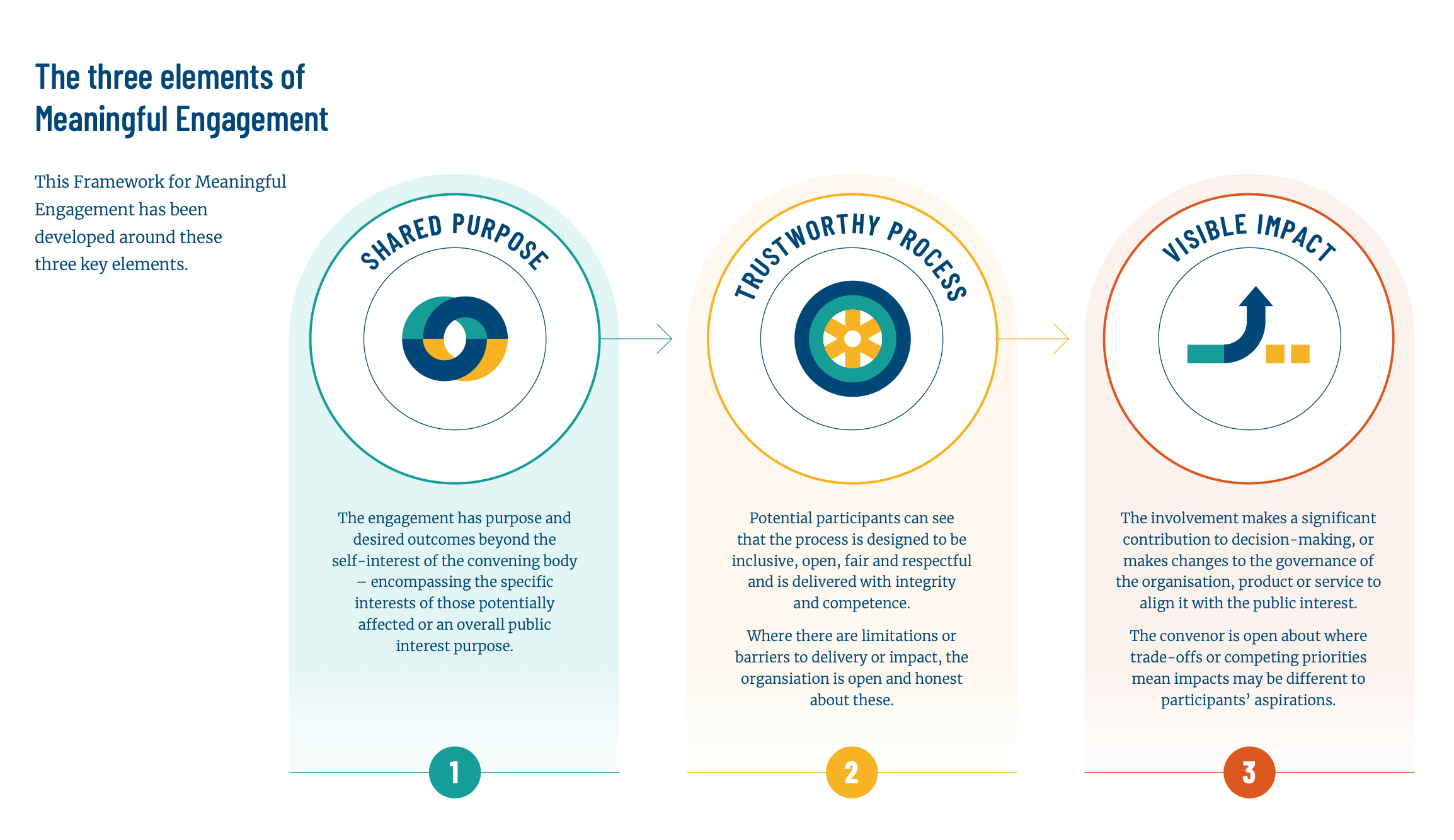
We decided to start off by exploring these questions through engagement with SocietyInside’s previous work. First the findings of my 5 year collaboration with Fraunhofer Institute for Systems Innovation Research on trust in and trustworthiness of governance and second a collaboration with the European Center for Not-for-profit Law and 150+ individuals and groups from civil society, business and public service across the globe to develop a framework for the Meaningful Involvement of Stakeholders. (We created this practical framework to help anyone designing products or services using artificial intelligence (AI), machine learning or algorithm-based data analytics to involve their stakeholders in that process - but it was very useful here too!). See next blog.
We would also like to thank the wonderful Hugo Schonbeck who on an email group I am on responded to my question about how to help young people be and feel heard with a fabulous note about the latest thinking and organisations doing it well. We will be doing something on that separately.
There is lots more to do in terms of the real practicalities of how we do this, but this is a starting point in the process of refining the values of The First Third which will be part of the discussions with young people as the organisation takes shape.
Let’s start with Trustworthiness
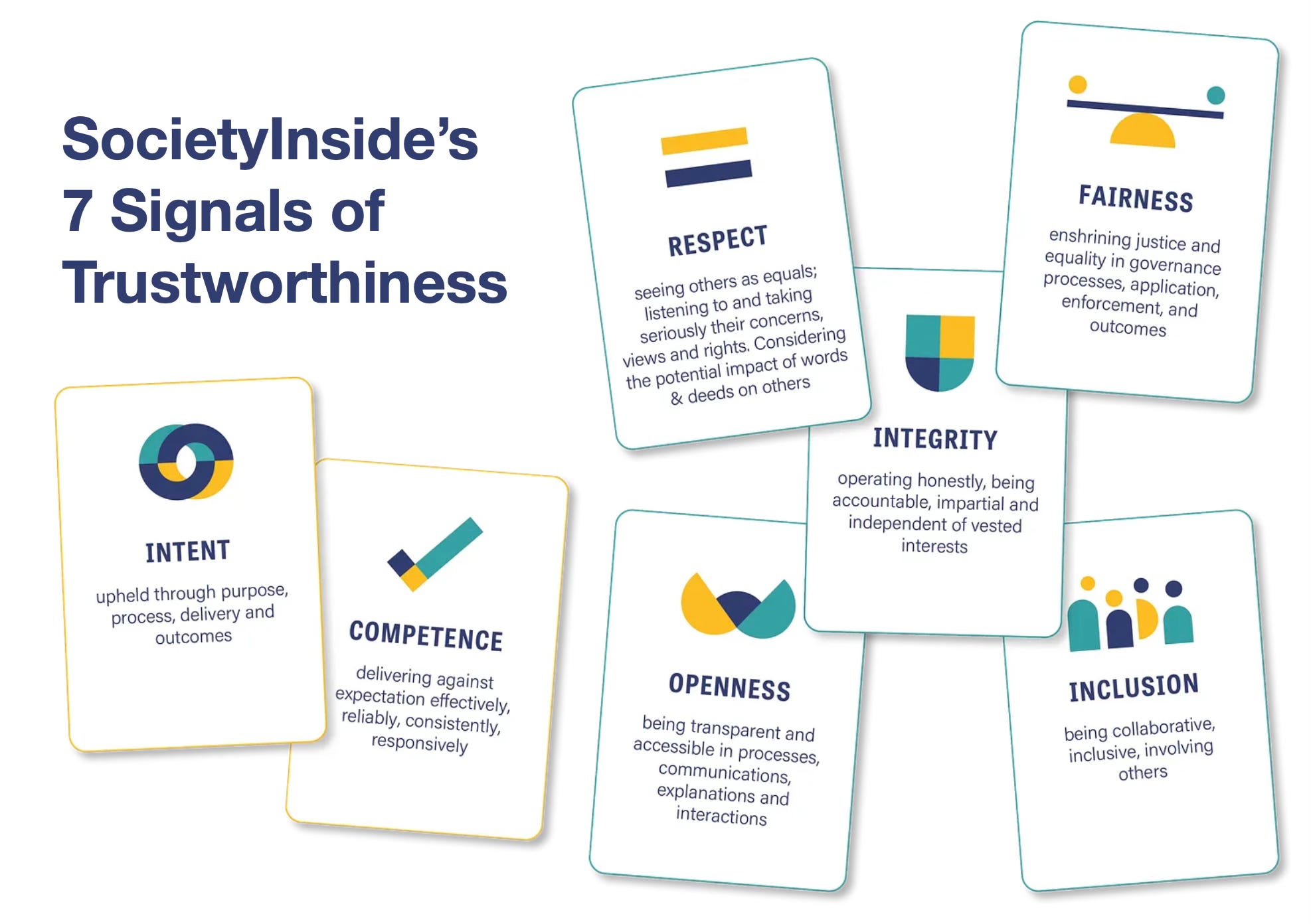
My key finding of the 5 year project on trust and governance can be summarised by the quote from Baroness Onora O’Neill in her 2004 Reith Lectures: “The question ‘How can we restore trust?’…is on everyone’s lips. The answer is pretty obvious. First be trustworthy. Second provide other’s with good evidence of your trustworthiness”.
When organisations chase trust as a goal, the answers usually revolve around communicating better so that the people can understand just how great they really are and so will suddenly come to their senses and realise they have misjudged them!
On the other hand, when the starting point is demonstrating trustworthiness, everything starts with you, your actions and their impact on others. Being considered trustworthy by our stakeholders from the get-go, and providing good evidence that we are will be the basis of our values and everything we do.
So, if The First Third is to be seen as trustworthy and so trusted by the young people in the first third of their lives and the stakeholders we seek to inspire, motivate and influence, what have these signals got to offer us? This is just an initial brain dump and not the considered recommendations of Joe and I, just a starting point for our discussions with others.
Taking each signal of trustworthiness in turn and reflecting on the commitment to be by and for young people.
Intent/purpose
We haven’t got the right language yet, this will come through our consultation process with co-founders, collaborators, board, advisory board, but our purpose is fundamentally to champion and advocate for the flourishing of young people through the dismantling of the Addiction Economy and rebuilding of the Connection Economy. This will be achieved through bringing the voices and perspectives of young people to design and deliver effective programmes which have a real world impact on young people’s lives.
Potential causes of distrust?
The distrust usually stems from a mismatch between purpose, projects and delivery. If our purpose is not seen as important or relevant enough to young people, or we are ineffectual for example, or if we make things worse. Or if, for example, we advocate for measures, such as restrictions on social media or AI design elements, restrictions on vapes or alcohol which some may disagree are needed.
Obviously we will not be trusted by the 10 industries we are highlighting in our work and perhaps the parliamentarians, regulators, education or addiction programmes we are criticising. We are good with that. However, the perceived and actual legitimacy of our evidence and positions is essential. The credibly researched voices of young people will add to that legitimacy.
Competence
When NGOs and charities lose trust it is often because they talk a good talk, but don’t deliver against their purpose, or are not competent in the management of projects or finances.
Potential causes of distrust?
This will be very important for The First Third with its huge bold vision. We will need to be very clear where our competences lie and where they don’t. This will be part of our scoping conversations with stakeholders.
Respect
I often reflected when doing this work that one could ditch all the other trust drivers and focus on Respect and you would end up encompassing the rest anyway. Think about when you have felt disrespected. It might have been an angry online interaction, when an employer treated you badly, someone didn’t do as they promised, or your concerns or beliefs were dismissed or ignored. Not nice was it? Did you feel like trusting that person or institution after that? Probably not.
The ‘science of disrespect’ is a huge field which shows we carry the feelings of anger generated by being disrespected with us for a long time. In the design of citizen dialogues, the decisions taken, even if they don’t align with the desired outcomes, are more likely to be accepted if participants feel they have been respected in the way they have been treated and that the design of the process has been respectful of their views and concerns.
Perhaps the most valuable finding of the Trust project was the importance of respecting and taking seriously the views of others – particularly those we don’t agree with or whose values and beliefs clash with our own. The perceived disrespect generated by a failure to do this can potentially undermine even the most trustworthy processes.
How do you respect people whose opinions and values conflict with your own? You decide to. Then commit to the actions that go with it.
Potential causes of distrust?
For example, we will be disrespecting young people if we don’t take the necessary steps to understand their perspectives or are not responsive to their concerns, or ignore or disrespect the views they give to us.
Integrity
We are using integrity in broad terms to cover the honesty and accountability of people, processes and institutions, but particularly seek to stress the importance of their impartiality and independence from vested interests.
Potential causes of distrust?
Given that our research will include direct research with young people the importance of safeguarding will be paramount for us and our suppliers. Also we will be particularly vigilant to ensure we do not misuse the information they give us, take it out of context or fail to take data privacy and integrity seriously.
Funding from any businesses which are associated with the 10 sectors whose activities we expose will be a breach of integrity. We are currently considering where the boundaries of funding by government departments lie, given that we will be a politically independent organisation.
Openness
Openness and transparency help increase understanding, demonstrate accountability, prevent and expose wrongdoing and provide ‘evidence of trustworthiness’ to help earn trust. Closed processes leave a vacuum to be filled by speculation, but ‘warts and all’ transparency can make individuals and organisations reluctant to share opinions freely and difficult discussions to go even further underground.
‘Goldilocks’ transparency is required – a thoughtful, evidence-based approach which delivers the right balance of openness and confidentiality to facilitate sharing and build external trust, whilst understanding where confidentiality may be important or effective in achieving stated goals.
Potential causes of distrust?
Integrity is often linked to openness. Trust can be lost and problems arise, not from a problem occurring, but from the cover up and contorted, yet often quite obvious attempts to divert attention or rationalise it as something else. Mistakes will happen and people understand this. When (not if, people aren’t naive) things go wrong they want someone to take responsibility and respond quickly to put things right.
We will be innovative and default to openness and transparency where possible. But where this is not desirable, provide clear explanations why this is in the public interest or the interest of participants in a trustworthy process.
Fairness
Perceived unfairness is one of the most powerful drivers of distrust as politicians of all hues are finding out to their cost. It is our visceral belief that the commercial environment is particularly unfair and harmful to young people which led to our 4 year research programme culminating in our book and the creation of The First Third.
Potential causes of distrust?
There is the potential for the policy positions we adopt may be considered unfair by some young people and others who feel differently. Again the integrity of our process, competency of our research and communications and clarify of purpose will help us to assess fairness and back up our decisions when challenged.
Inclusion
Inclusion is an essential component of our purpose and competence. Broadly speaking inclusion is important for three reasons (1) because diverse perspectives result in better and wiser judgements, (2) giving genuine agency to others, in our case advocating for this for young people in shaping decisions that matter to them makes them more likely to trust those decisions, (even if they don’t go their way) and (3) as OECD research found in relation to societal trust, people “are more likely to trust a decision that has been influenced by ordinary people than one made solely by government or behind closed doors.”
Potential causes of distrust?
If we aren’t inclusive of all young people, and concentrate on the easy to reach, such as those in towns, certain demographics or those with particularly vocal perspectives at the expense of others, we will fail at our core purpose and essential competence. Assumptions about what young people think are very often wrong and initiatives based on incorrect assumptions more likely to fail.
But young people have better things to do than waste their precious time on a pointless engagement exercises, where views are not taken seriously and where the rationale is mainly about ticking the diversity box on the stakeholder engagement checklist. We will not do that sort of research or engagement.
Love any thoughts and references you think might help us below.
Ensuring that we do not deliver tick box inclusion and that young people’s time is not waste will be the focus of my next blog. I will explore the scope and competency of inclusion using as a starting point the framework for the Meaningful Involvement of Stakeholders I did in collaboration with the European Center for Not-For-Profit Law
Here are the three elements of meaningful engagement.